

The ProActive Leaders Approach helps school and district leaders transform improvement priorities into clear systems, stronger professional practice, and measurable progress. Leadership is most powerful when it creates the conditions for teachers to grow, teams to collaborate, and students to thrive.

Take our 10-minute diagnostic to identify gaps in your school's current alignment.

Join our experts live to explore evidence-based strategies that simplify systems.

Meet with a senior systems consultant to plan your school or district's path forward.
Every day, school and district leaders balance an extraordinary number of responsibilities. They’re expected to improve student achievement, strengthen instruction, develop teachers, support struggling learners, implement new initiatives, respond to data, build culture, manage operations, communicate with families, and prepare their schools for what’s next.
Every responsibility matters. Every initiative has value. The challenge is building systems that allow improvement to continue without constant intervention.
Schools often struggle because improvement depends too heavily on individual leaders instead of strong systems.
The strongest leaders eventually recognize an important truth: Lasting improvement is created by building systems that help everyone contribute more effectively.
The ProActive Leaders Approach helps leaders build systems that create clarity, strengthen professional practice, and sustain continuous improvement across the entire school.Instead of solving every problem, leaders create the conditions where teachers collaborate effectively, instructional decisions are guided by evidence, and improvement continues every day.
The best leaders build schools that no longer depend on them.
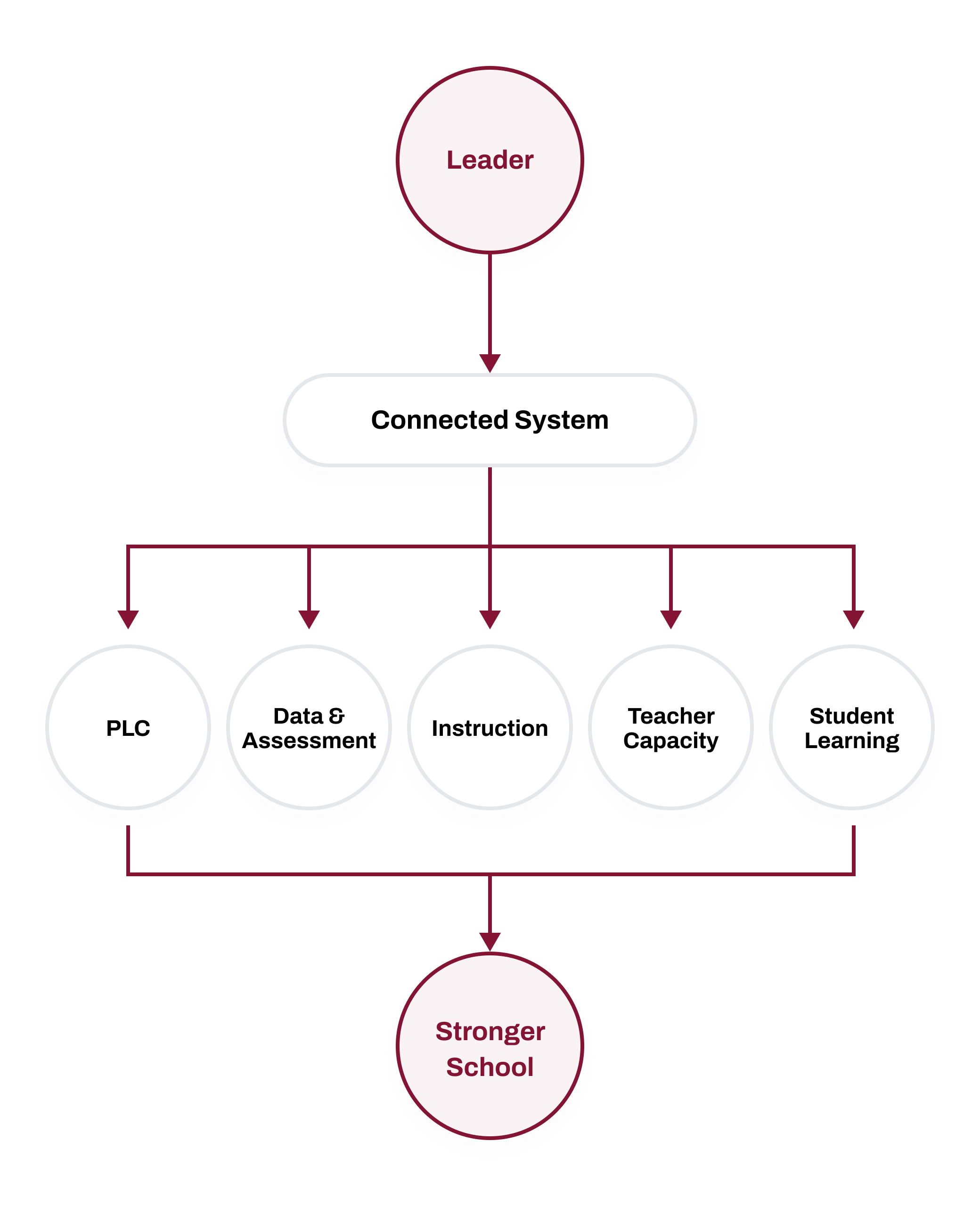
Great leaders measure success by what their schools become.The ProActive Leaders Approach helps leaders build the conditions where collaboration, evidence-informed decisions, and continuous improvement become part of everyday practice.

Everyone understands the school’s instructional priorities, expectations, and definition of success. Teachers no longer interpret improvement individually because the organization moves toward a common vision.

Professional learning becomes continuous. Teachers, coaches, and emerging leaders grow because learning is connected to daily practice.

Student work, classroom observations, assessment evidence, and collaborative conversations guide instructional decisions. Improvement becomes evidence-informed rather than assumption-driven.

Excellent teaching becomes increasingly consistent across classrooms because expectations are clear, support is ongoing, and professional learning is connected to implementation.

Leadership expands beyond titles. Teacher leaders, coaches, PLC facilitators, and administrators share responsibility for strengthening instruction and improving student learning.

Systems continue improving because routines, coaching, collaboration, and evidence remain intentionally connected over time. Improvement no longer depends on extraordinary effort from a few individuals.
Leadership develops through the daily work of improving schools. The ProActive Leaders Approach helps leaders strengthen their practice while leading the real work already happening in their schools. Every leadership experience becomes an opportunity to learn, refine practice, and strengthen the systems that support teachers and students.

Strengthen leadership practice through individualized coaching focused on current priorities and real leadership challenges.

Observe instruction with purpose, identify patterns, and connect classroom evidence to meaningful leadership decisions.

Turn improvement priorities into practical implementation plans that create clarity, alignment, and measurable progress.

Strengthen collaboration across leadership teams so leadership becomes increasingly collective rather than individual.

Transform classroom observations, student evidence, and implementation data into practical next steps for continuous improvement.

Receive continuous guidance as leadership teams refine systems, respond to challenges, and sustain improvement over time.
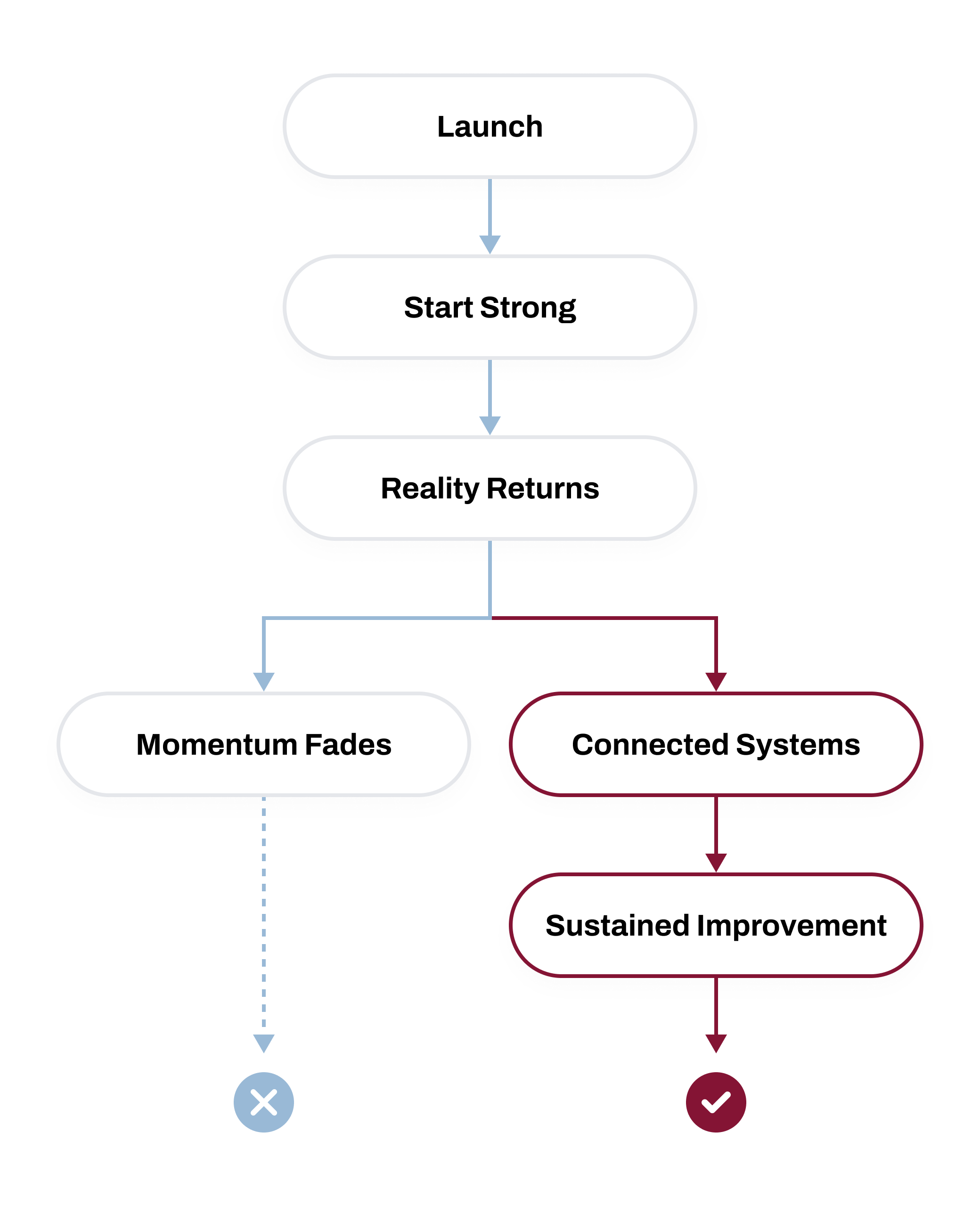
School improvement efforts can begin with optimism. Goals are established, professional learning is delivered, and new initiatives begin with energy and commitment. Over time, competing priorities, daily demands, and inconsistent implementation begin to erode that momentum.
Coaching becomes less frequent, collaboration loses focus, and improvement gradually slows. Lasting change depends on building systems that keep improvement active long after the initial excitement has faded.
Improvement becomes sustainable when systems make continuous improvement part of everyday practice.
Leadership is revealed through hundreds of small consistent repeatable decisions.
The evidence they study. The classrooms they visit. The conversations they encourage. The feedback they provide. The expectations they reinforce. These daily actions shape how teachers teach, how teams collaborate, how students learn, and how schools improve.

People understand what matters because leadership consistently reinforces shared priorities.

Learning becomes purposeful because it connects directly to classroom practice.

Professional conversations become focused on improving teaching and student learning.

Teachers receive the clarity, coaching, and support needed to continuously strengthen instructional practice.

Students benefit from greater instructional consistency, clearer expectations, and stronger learning experiences across classrooms.

The school becomes increasingly capable of improving because leadership has strengthened the system—not simply individual performance.

Every leadership decision influences far more than the moment in which it is made. Small, consistent actions shape how teachers think, collaborate, make instructional decisions, and support student learning.
When leaders create clarity, strengthen professional practice, and build connected systems, those decisions ripple throughout the entire organization.
The strongest leaders understand that every decision either strengthens or weakens the systems that shape teaching and learning every day.
The impact of leadership is seen in stronger instructional systems, more purposeful collaboration, clearer expectations, better coaching, and a culture where continuous improvement becomes part of everyday practice. Across the country, school and district leaders have partnered with ProActiveEd to strengthen leadership teams, improve instructional coherence, and build systems that continue improving long after implementation begins.
Leadership is successful when improvement becomes part of the culture. When leadership strengthens systems, schools become increasingly capable of improving on their own.
Every school and district is at a different stage of its improvement journey. Some are building stronger instructional systems. Others are developing leadership capacity, strengthening coaching, or creating greater coherence across schools.Wherever your team is today, the next step begins with understanding your current reality and identifying the highest-leverage opportunities for growth. We can build a clear path forward.
Let's discover where to go next.

Take our 10-minute diagnostic to identify gaps in your school's current alignment.
Join our experts live to explore evidence-based strategies that simplify systems.
Meet with a senior systems consultant to plan your school or district's path forward.